
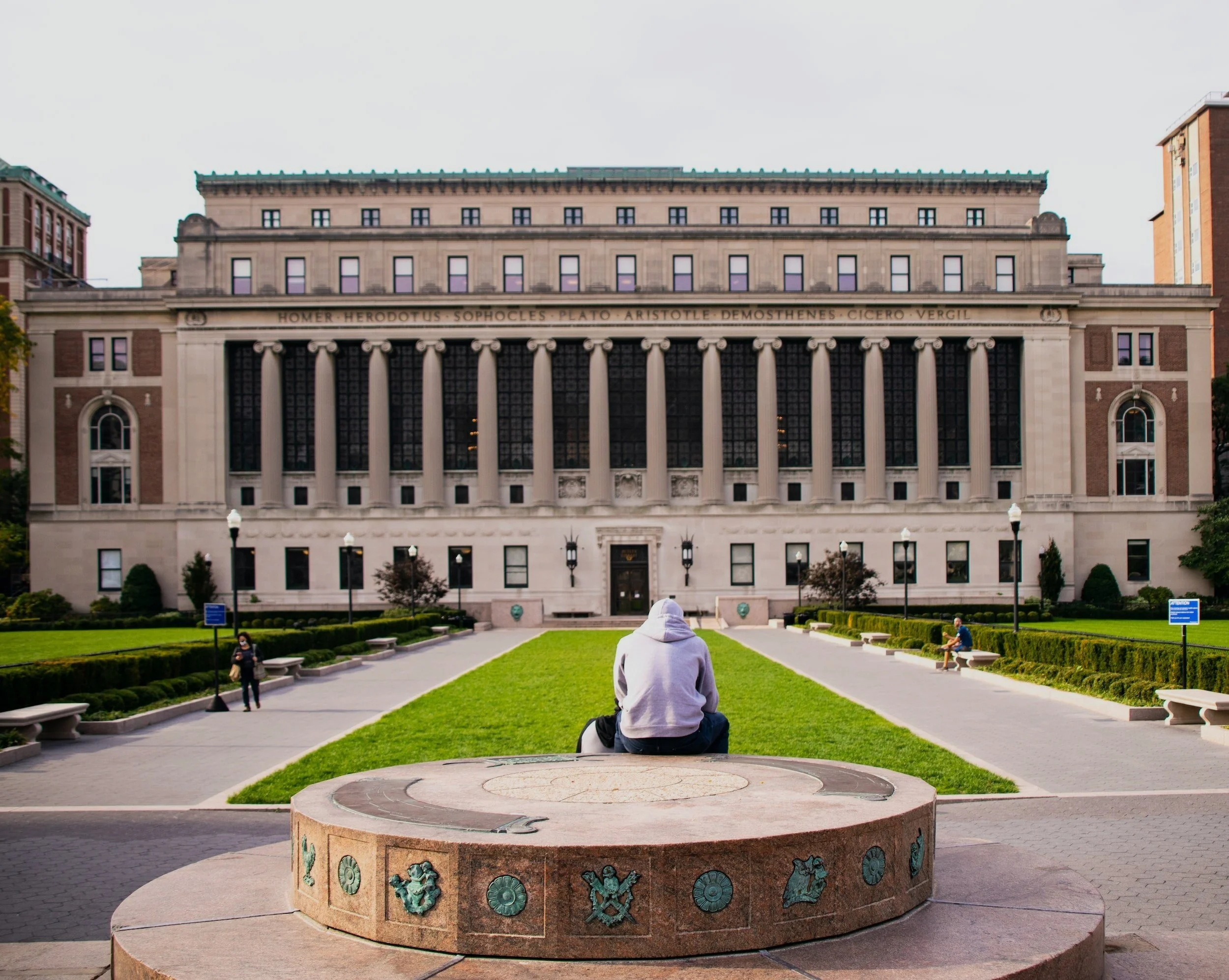
Whether you're starting a career in climate, hiring talent, or building on the latest research, Washington, D.C.'s universities (Metro Area) are the place to start.
Johns Hopkins, Georgetown University, and George Washington University anchor the region's climate research and feed talent into the industries doing the work. Read on for a starter guide to the major programs and centers.
Johns Hopkins
Johns Hopkins Ward Infinity Impact Accelerator
Ward Infinity is a sixteen-week, accelerator run by Johns Hopkins for community-rooted ventures solving health and environmental challenges across the DC metro, based at a local hospital campus, with a climate-resilience and local-food-systems track. Fellows get non-dilutive capital, mentorship, and resources, blending design thinking, public health, and entrepreneurship, and join a lasting network of changemakers. Suits mission-driven, community-rooted DMV founders working at the health, environment, and equity intersection.
Ralph O'Connor Sustainable Energy Institute
ROSEI is Johns Hopkins's central sustainable-energy research and education institute. It is not a dedicated accelerator, but it actively supports commercialization through an annual translation-to-market workshop with the university's tech-ventures office and an explicit aim to cultivate energy and climate startups from Hopkins labs. Its direct value to founders is research, talent, and translation rather than a cohort or checks. Founders route to Johns Hopkins Technology Ventures for spinouts and MEIA for local commercialization. Suits Hopkins-affiliated researchers exploring a spinout.
Ralph O'Connor Sustainable Energy Institute Centers
The ROSEI centers are Johns Hopkins research centers focused on a fully decarbonized grid, offshore wind reliability, and net-zero supply chains. Their value is research, tools, talent, and workforce, and founders route to Johns Hopkins Technology Ventures for any IP and to MEIA and MEI2 for commercialization. This center is suited for researchers and technical talent.
Georgetown University
Georgetown Climate Center
The Georgetown Climate Center is a nonpartisan law and policy center advancing federal, state, and local climate policy and maintaining a widely used adaptation clearinghouse, not a startup program. It serves policymakers, and for founders it is a knowledge resource on adaptation policy rather than a source of capital or acceleration. Founders route to MEIA or Halcyon for programmatic support. Suits founders wanting to understand adaptation policy context, as a reference rather than a program.
Earth Commons: Institute for Environment & Sustainability
Georgetown's Earth Commons is the university's environment and sustainability institute for research, education, and degree programs, not primarily a venture accelerator, though it hosts nascent environmental-entrepreneurship activity with Georgetown Entrepreneurship. Its direct value is research and education rather than capital or a cohort. Founders route to Georgetown Entrepreneurship rather than Earth Commons itself for venture support. Suits Georgetown students and researchers testing an environmental venture idea.

George Washington University
Environmental & Energy Management Institute Institute
The Environmental & Energy Management Institute is a research and policy institute focused on the economics, technology, and public policy of solar deployment, not a founder program, doing analysis, education, and outreach. Its value to founders is policy insight rather than capital or acceleration. Solar founders route to federal non-dilutive programs and regional accelerators like MEIA. Suits researchers and policy-oriented students, with those programs as the founder doors.
American University
Center for Environmental Policy
American University's Center for Environmental Policy is a research and policy center aimed at improving US environmental governance through webinars, symposia, awards, and reports, not a startup program. Its value to founders is policy research rather than capital or acceleration. Founders route to accelerators and funds for venture support. Suits policy researchers rather than founders.

Howard University
Environmental & Climate Justice Center
Howard University's Environmental and Climate Justice Center sits in its law school and focuses on environmental-justice scholarship, education, and advocacy, serving communities and nonprofits rather than for-profit founders. Its value is legal and policy expertise and community support rather than venture programming. Mission-aligned founders route to Halcyon, which prioritizes equity-driven entrepreneurs. Suits environmental-justice advocates and community organizations, with Halcyon as the founder door.
University of Maryland, College Park
Maryland Momentum Fund
The Maryland Momentum Fund is a university venture fund providing gap equity or convertible-note investment into Maryland startups affiliated with the state university system by founder, IP, or location, positioning them for a Series A within a year or two. It is sector-agnostic, so climate is eligible but not the focus, and requires a third-party co-investment match, with coaching even for applicants not selected. Suits state-university-affiliated founders, including climate, with early traction raising a bridge round.
Center for Global Sustainability
The University of Maryland's Center for Global Sustainability is a research and policy center delivering emissions-pathway analysis and policy engagement, not a startup program. Its value to founders is research and policy insight rather than capital or acceleration. Founders route to MEI2 and MEIA for commercialization. Suits policy researchers, with the Maryland energy programs as the founder doors.
Center for Environmental Energy Engineering
Maryland's Center for Environmental Energy Engineering is an industry-sponsored research lab specializing in HVAC, refrigeration, heat pumps, and heat exchangers, operating a consortium model where corporate and government sponsors pool funds and license results, not a founder program. It does spin out companies and license IP, so its founder value is licensable thermal-systems technology. Founders route to UM Ventures for licensing and MEIA to build a venture. Suits corporates sponsoring research or founders licensing thermal-systems IP.
Maryland Energy Innovation Institute
MEI2 is a state-created institute to commercialize clean-energy technology, awarding energy seed grants and prototype-demonstration funding and serving as the parent and partner of the Maryland Energy Innovation Accelerator, rather than running its own cohort. Its founder value is early commercialization capital and the MEIA pathway. Founders route to MEIA and its seed grants. Suits Maryland university researchers moving lab energy technology toward a company.
George Mason University
Institute for a Sustainable Earth
George Mason's Institute for a Sustainable Earth is a research-coordination and convening body connecting many faculty and students and offering internal seed grants to faculty teams, not external startups, so it is not a founder program. Its value is research collaboration and convening rather than venture support. Mason-linked founders route to Virginia Venture Partners and the state innovation ecosystem. Suits Mason researchers, with those state vehicles as the founder doors.
Center for Climate Change Communication
George Mason's Center for Climate Change Communication is a social-science research center studying public understanding of climate change and training weathercasters, not a startup program. Its value is communications research and practitioner training rather than capital or acceleration. Founders needing programs route to regional accelerators and funds. Suits communications researchers and climate-communication practitioners rather than founders.
Independent Research Institutions
World Resources Institute
The World Resources Institute is a global research institute headquartered in DC, and while it runs entrepreneur programs they are land-restoration focused and targeted at Africa, Latin America, and South Asia rather than DMV climate tech broadly. For a DMV founder its local value is research and convening rather than a program. Founders route to MEIA and Halcyon for regional support. Suits restoration entrepreneurs in the Global South, with the regional accelerators as the DMV founder doors.
Resources for the Future
Resources for the Future is an independent environmental-economics research institution in DC producing impartial analysis, such as work underpinning the social cost of carbon, with no startup program. Its value to founders is economic and policy knowledge rather than capital or acceleration. Founders route to accelerators and funds for venture support. Suits economists and policy analysts rather than founders.