
Chapters / Amsterdam
Amsterdam

The Dutch grid is so full that new connections wait in a queue, making constraint the market. Amsterdam's chapter brings that community together, and it works in English.
Amsterdam and Climate Tech
Amsterdam's climate story starts with a wire that is full. The Dutch electricity grid is so heavily congested that new connections across much of the country face long queues, and large users are often told there is no capacity available. For founders, that constraint is the market. Flexibility, storage, smart charging, demand response, local energy management, and forecasting are not speculative categories here; they are products that grid operators, industrial users, and municipalities are buying today. In that sense, the Netherlands is running Europe's grid transition several years ahead of much of the continent.
The second force is regulation, and Amsterdam sits unusually close to it. European rules on corporate sustainability reporting, carbon border pricing, and aviation and maritime fuels are creating durable demand for measurement, compliance, and decarbonization technologies. At the same time, Amsterdam's role as a European financial center means many of the institutions adapting to those rules are in the same city as the companies building the tools to meet them. That proximity has helped create one of Europe's deepest pools of climate and impact capital, spanning specialist energy transition funds, bank-backed impact investors, and the Dutch state investment institution.
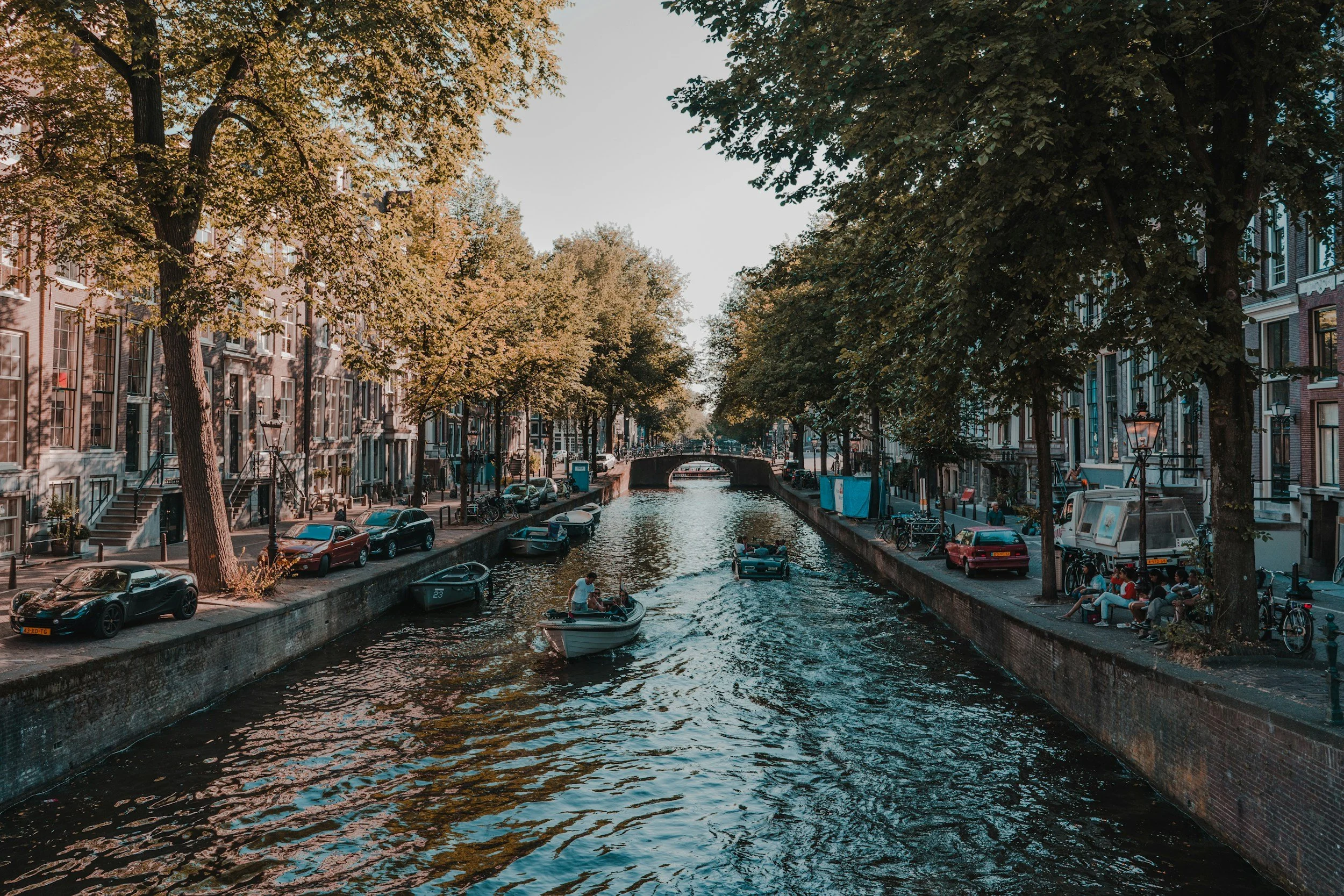
The third force is the city's own appetite for experimentation. Amsterdam committed early and publicly to a circular economy, adopting a framework that treats material use and social outcomes as part of the same challenge. It has backed that commitment with procurement, pilot programs, and living labs, making municipal government an unusually accessible first customer for companies developing circular materials, reuse systems, and low-carbon construction technologies. The Port of Amsterdam adds industrial scale as it shifts from petroleum handling toward hydrogen and sustainable fuels, while Schiphol Airport makes aviation decarbonization an operational necessity rather than an aspiration. Dutch strengths in agrifood, greenhouse horticulture, and water management complete the picture, with expertise in water management serving as a major export industry as well as a domestic capability.
None of this requires Dutch. English is the working language of the ecosystem, and accelerators, investors, and industry events are built with international founders in mind, making Amsterdam one of the easiest European cities in which to land, build a company, and start selling.
Amsterdam suits founders building for grid congestion, circular materials, agrifood, climate finance, or water technology who want European regulatory tailwinds, deep pools of impact capital, and a city government willing to act as an early customer.
Amsterdam Resources
A starter guide to the programs, partners, and capital powering climate tech in Amsterdam.



Stay in the Loop
Join the NYC newsletter to get the latest updates on the events, news, and more in your local community. We use Substack as a newsletter platform, so click through and sign up there!